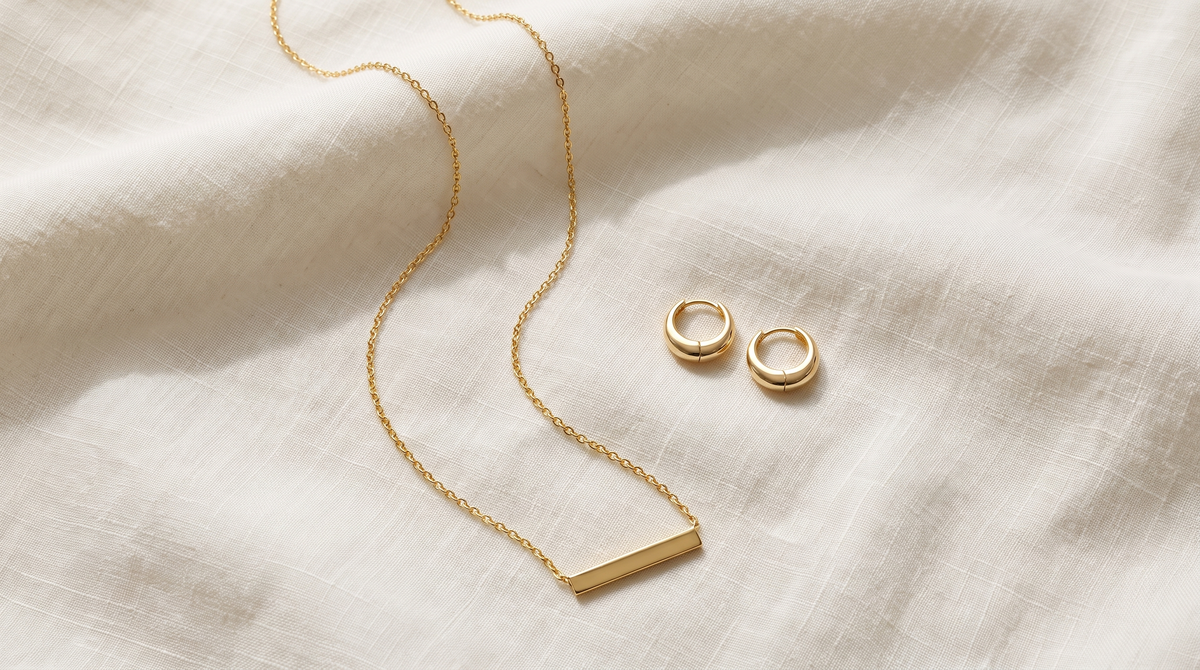
How to Combine Earrings Without Overdoing It
The reliable formula is two earrings on one ear, scaled so they do not compete. Most combinations that feel overdone fail on one of three things: too many pieces, pieces of equal weight fighting for attention, or no space between them. Fix those three and almost any pairing calms down.
Let scale fall as it climbs
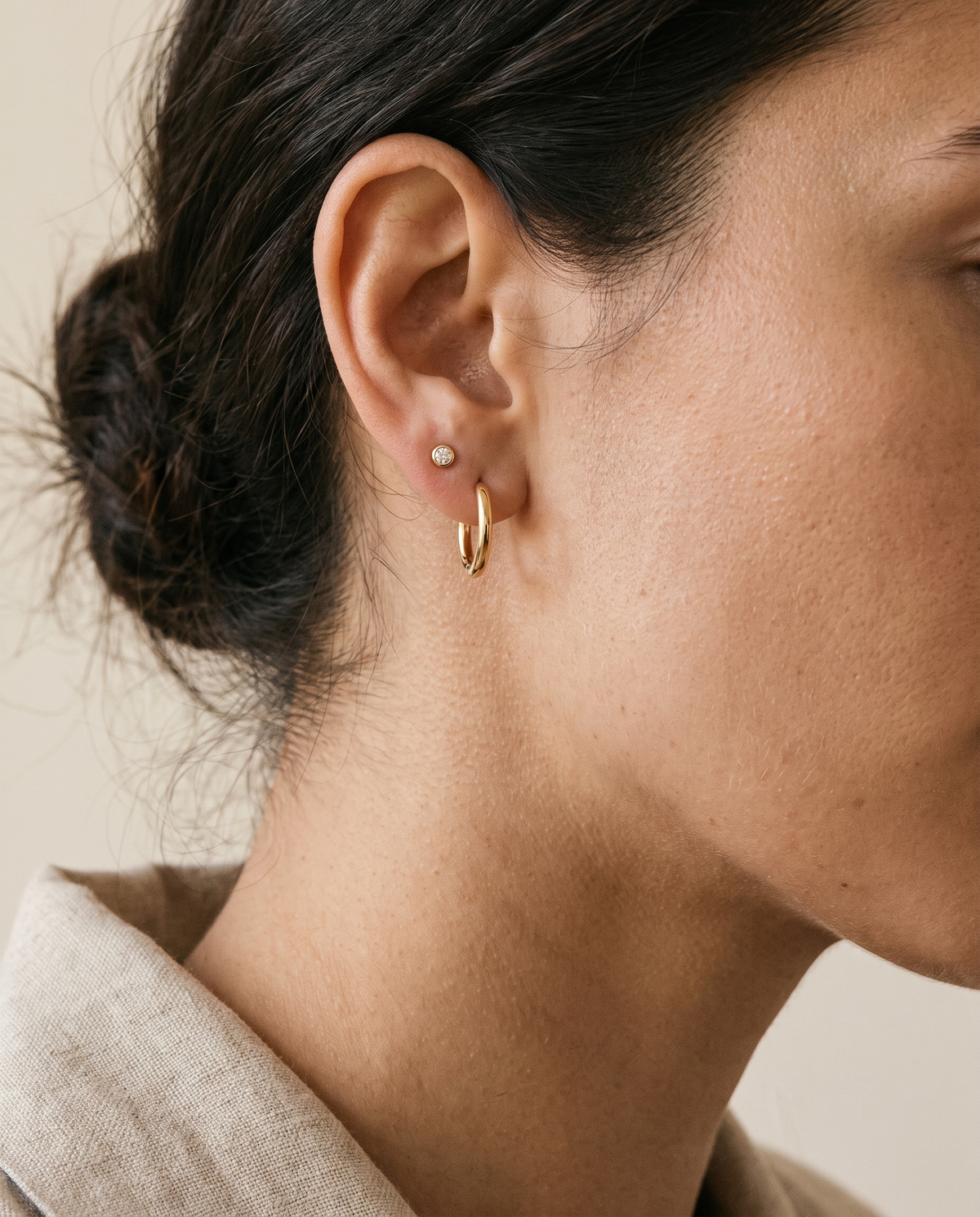
The strongest piece sits lowest. Keep the fullest earring at the first lobe piercing and let anything above it get smaller and simpler. A huggie low with a small stud above is the pairing that almost cannot go wrong: one shape with presence, one point of light, and skin between them.
That visible sliver of skin is doing real work. Earrings touching each other read as clutter; earrings with a little air read as a composition.
One focal piece per ear
If you wear hoops, let one size lead. Two hoops of the same diameter on one ear cancel each other out; a larger hoop with a clearly smaller one above reads as intentional. The same is true across types: one earring gets the attention, the rest support it.
The two ears do not have to match
Symmetry is a choice, not a requirement. A pair of studs worn alone is symmetry, and it is quietly strong. Two earrings on one ear and one on the other is asymmetry, and it works when the overall weight feels balanced from a step back. Ears themselves are not identical, and piercings sit differently on everyone, so trust the mirror over any diagram.
Three earrings on one ear is usually the ceiling before pieces start competing. If you are hesitating over a third, that hesitation is the answer. The wider logic behind this restraint is in How to Choose Jewelry That Works Together.