How to Choose Jewelry That Works Together
Pieces work together when they share something and compete for nothing. That is the whole mechanism. Matching sets force it by making everything identical. You can get the same calm with pieces that merely agree, which is more interesting to look at and much easier to live with.
Share something
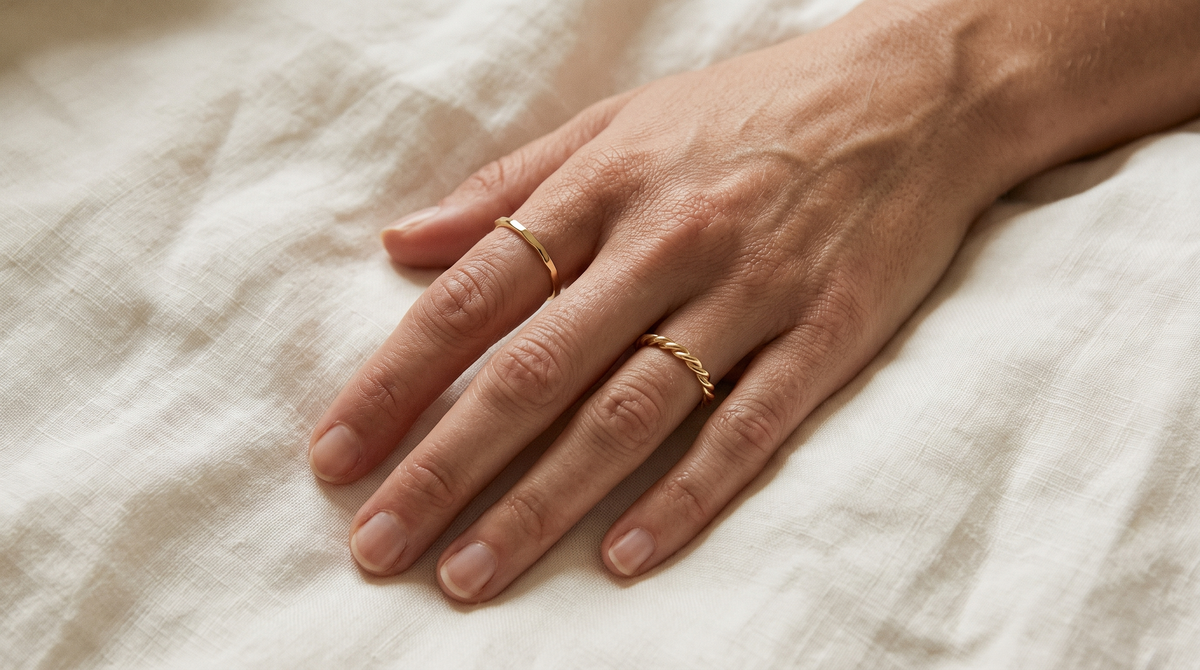
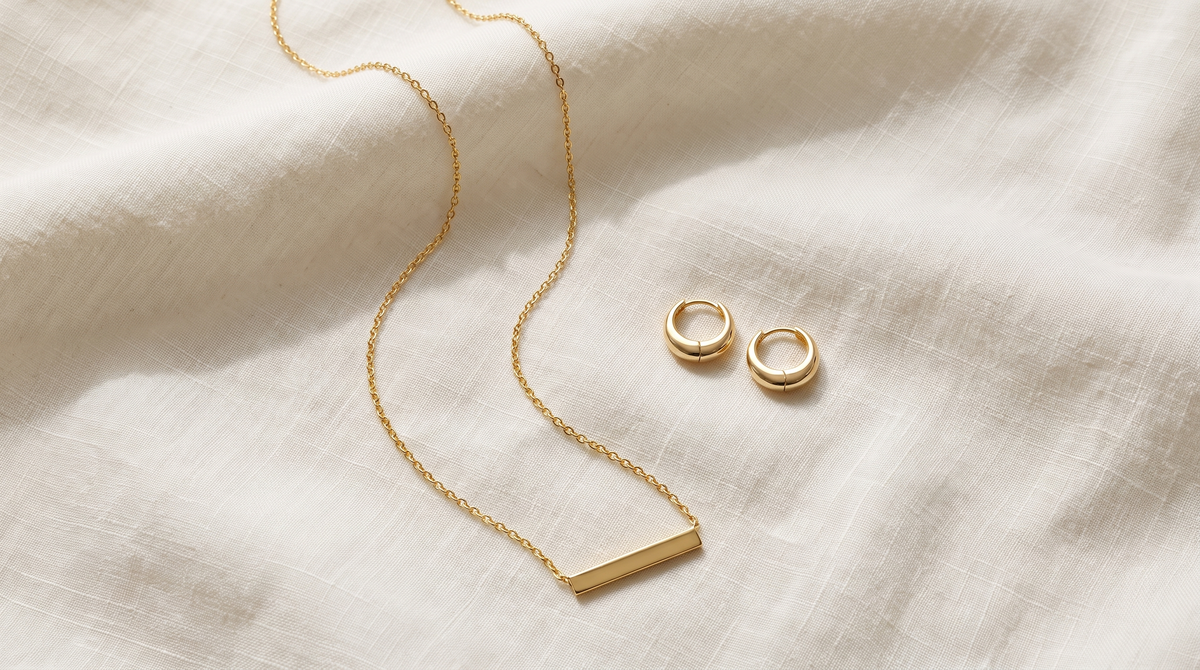
Any repeated trait will connect two pieces: the same metal, the same line weight, the same soft geometry, the same polish. One shared trait makes a pair related. Two make it look planned. A fine chain necklace and a slim ring in the same gold already belong to each other; nothing about them needs to match beyond that.
Compete for nothing
Give the look one focal point. One piece gets to be the loudest, whether by size, shine or placement, and everything else stays a register quieter. When two pieces shout at the same volume from different places, the eye bounces between them and the whole look reads as busy, even if each piece is beautiful alone.
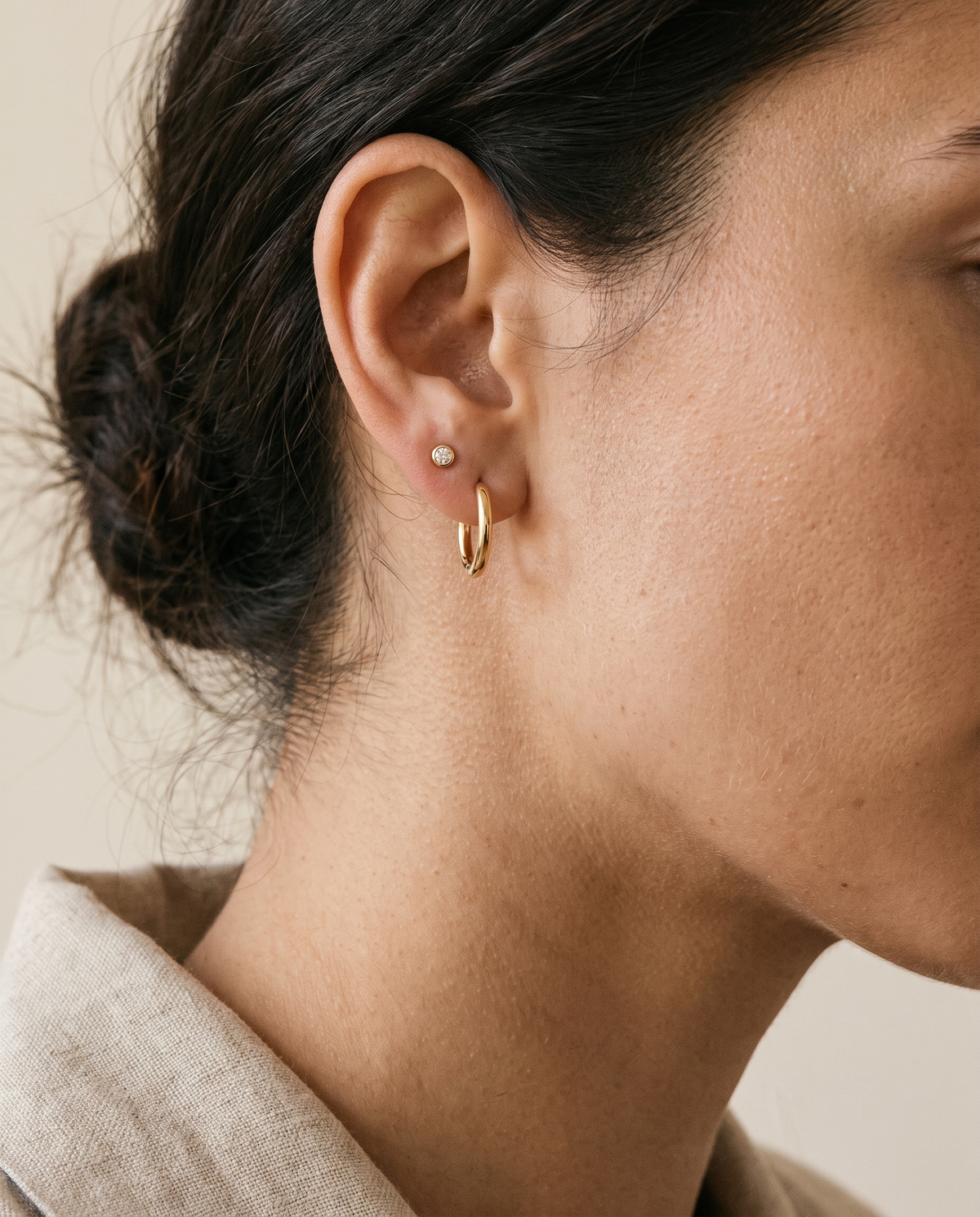
Scale matters more than count. A small stud, a fine chain and a thin band are three pieces that still read as quiet. One heavy statement necklace is one piece that fills the room. Judge the total visual weight, not the number.
Then stop early
Space is part of the composition. Bare skin between pieces is what makes the worn ones look chosen, which is why two pieces often look stronger than five. When you are unsure, remove one thing and look again. It is rarely worse.
The same logic runs through the specific cases: mixing gold and silver, building an earring combination, choosing a necklace for a neckline, and wearing more than one ring. Different zones, one idea: repeat something, crown one thing, leave room.